The Interactive Layer Your Q4 Event Strategy Is Missing
September 23, 2026
Experiences by Interactive Entertainment Group
By the time Q4 arrives, most of the big decisions are already made. The venue is booked, the catering is locked, the agenda is taking shape, and budgets are spoken for. At that point, it can feel like the event is essentially finished.
But interactivity is one of the few elements that can still be layered into an existing event without forcing planners to rethink the entire plan. For holiday parties, client receptions, conferences, awards programs and year-end meetings, that layer can solve some very practical problems.
The Agenda Is Set. The Attendee Experience Might Not Be.
A run of show tells you what is happening. It does not always tell you what attendees are doing between those moments. Think about the 30 minutes before dinner, the gap between sessions, the cocktail hour before an awards program or the reception after a conference day.
These are often the least structured parts of an event. Without something to anchor them, guests default to conversation, drinks, their phones or simply waiting for what comes next. Interactivity gives those moments a purpose without adding another formal item to the agenda.
Give Unstructured Time Something to Do
Mirror Box | Experience by Interactive Entertainment Group
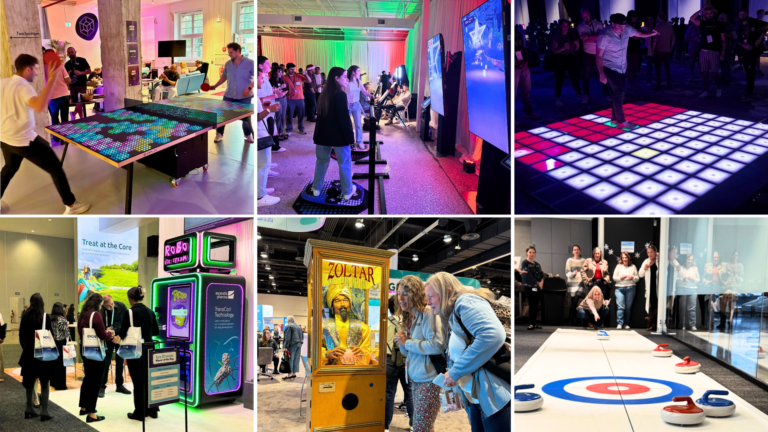
Not every part of an event needs more programming, but open time still benefits from a little direction. Arrival windows, cocktail hours and transitions are natural opportunities to give attendees a reason to gather, interact or create a shared moment without adding another item to the agenda.
The right experience can become an easy focal point during those stretches, giving attendees something to engage with while the rest of the event continues around it.
Giant Operation | Experience by Interactive Entertainment Group
Networking may be on the schedule, but putting people in the same room does not automatically make interaction happen. This is especially true at holiday parties, client events and company gatherings where guests may come from different departments or organizations.
A shared activity creates an immediate point of reference and a reason to walk over, watch, participate or compare results. That can make conversation feel more natural without turning the event into forced team building.
Soccer Circle | Experience by Interactive Entertainment Group
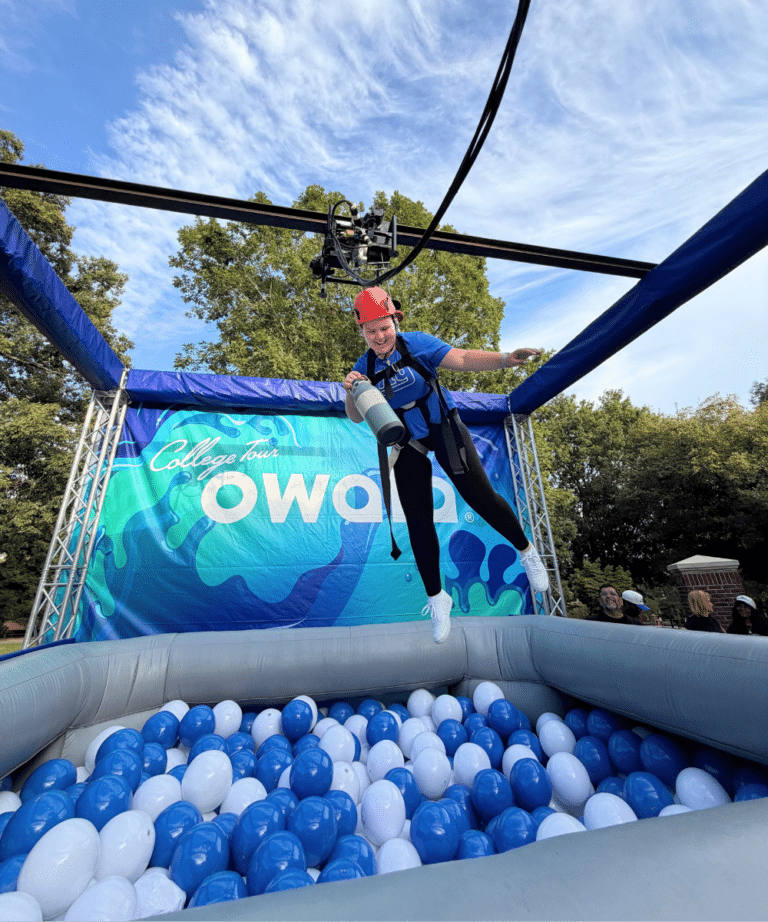
An interactive element should feel connected to the event around it. Think about the audience, tone, brand, setting and overall purpose, then choose an experience that supports those elements rather than competing with them. The strongest additions feel intentional, whether that comes through the gameplay, messaging, customization or the way attendees engage with it.
Racing Chairs | Experience by Interactive Entertainment Group
The value of an interactive element is not limited to the person using it. Some of the best experiences also create a spectator moment. People gather around, watch a colleague compete, react to a score or wait to see what happens next.
An experience that engages a handful of people directly but draws a larger group around it can influence much more of the room than its footprint suggests.
Once Q4 is underway, the venue, agenda and catering may already be locked, but the guest experience does not have to be. Interactivity can support networking, give sponsors a more meaningful role, fill downtime and create a stronger focal point without forcing a major rethink. Start with what the event still needs, then choose an experience that fits the space, timing and audience.
No Time to Chill: Sports Marketing Stays Hot This Winter
Fall may get a lot of attention on the sports calendar, but December is far from the finish line. Championship races, postseason football, basketball, hockey an…
No Time to Chill: Sports Marketing Heats Up This Fall
The temperature might be dropping, but the sports calendar has other plans. Fall rolls straight from postseason baseball into football rivalries, basketball tip…
Putting Performance in Play with Sharp at PRINTING United
Sharp brought competition to the show floor at PRINTING United 2026 with Speed Pitch and a custom leaderboard. Attendees stepped up, tested their pitch speed an…
5 Year-End Meeting Ideas Your Team Will Actually Enjoy
By the time the year-end meeting hits the calendar, most teams have already sat through plenty of recaps, forecasts and decks. The content still matters, but th…
The Spectator Effect: A Framework for Turning Attention Into Action
Some experiences work far beyond the person actively participating. They pull attention from across the room, create a crowd and give people a reason to linger …
Modelo brought match-day energy outside Nu Stadium with a custom soccer challenge built for competition. Working with Cogent World, fans tested their footwork, …
Kraft Heinz Field of Dreams Summer Party: Taking Fan Engagement to Wrigley Field
There are some settings where the theme practically writes itself. For the Kraft Heinz Field of Dreams Summer Party at Wrigley Field in Chicago, the assignment …
Part 2 goes deeper into winter with three immersive activation ideas that bring the season into the experience itself. From oversized hockey to virtual slopes a…
Winter activation season is closer than it looks. From immersive photo moments to prize-driven experiences and larger-scale attractions, these winter-ready idea…