How Brands Can Tap Into Fall Sports Without an Official Sponsorship
September 8, 2026
Experiences by Interactive Entertainment Group
Fall comes with built-in attention. Football returns, baseball reaches the postseason, basketball and hockey get underway, and major races fill the calendar.
For marketers, that creates months of competition, rivalries and shared fan behavior to build around. An official sponsorship can be valuable, but brands can still tap into the season through sports-inspired experiences that feel timely, relevant and connected to their own messaging.
Build Around How Fans Engage
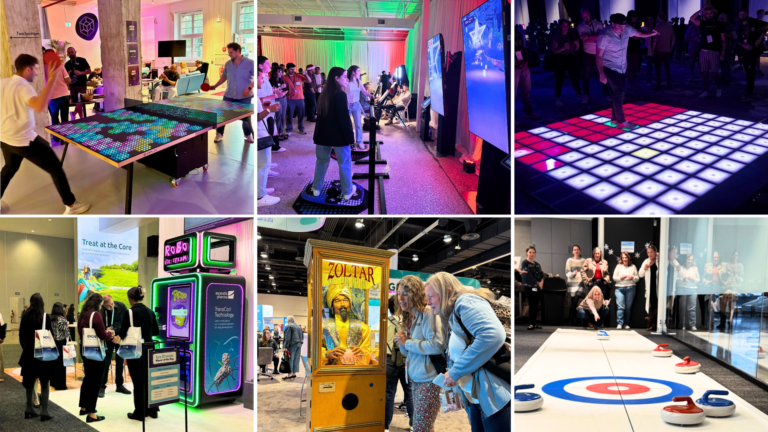
Multiball LED Tennis | Experience by Interactive Entertainment Group
The strongest sports activations start with what people naturally want to do: compete, score, test their skills and see how they stack up.
Passing and accuracy challenges can play into football season. Shooting competitions make an easy connection to basketball or hockey. Tennis-inspired experiences can turn serves, returns or target accuracy into a challenge, while racing simulators bring speed and leaderboards into the mix. Reaction-based experiences can capture the competitive energy of sports without needing to center on one specific game.
Brands can fully customize these experiences with their own logos, colors, messaging and campaign creative. They just need to avoid implying an official relationship with a team, league or event unless those rights are in place.
Speed Pitch | Experience by Interactive Entertainment Group
Sports-inspired experiences work because there’s very little learning curve. People understand competition, they want to see their score and, once someone else puts up a number, they immediately want to beat it.
Sports translate well to experiential marketing because many of the mechanics are instantly familiar. Attendees understand the goal quickly, which matters on a busy trade show floor or at a large event.
Short rounds, clear scoring and simple instructions make it easier for people to step in without much explanation. They also give brands more opportunities to engage attendees throughout the event.
Racing Chairs | Experience by Interactive Entertainment Group
The sport can get someone’s attention, but the brand should still have a reason to be part of the experience.
A company focused on speed might build around reaction time. A performance-driven brand could lean into accuracy or endurance. A travel company might turn different destinations into stages of a challenge.
Customization can also bring campaign messaging directly into the gameplay, allowing the interaction itself to reinforce what the brand wants attendees to remember.
Urban Hoops | Experience by Interactive Entertainment Group
The participant is only part of the audience.
Visible scores, leaderboards and head-to-head competitions give other attendees something to watch while they wait. A clear win condition can encourage coworkers to challenge each other, while top scores give people a reason to return later.
That spectator element can help an activation attract attention before someone ever steps up to play.
Giant Dome Hockey | Experience by Interactive Entertainment Group
Sports-inspired marketing can work at trade shows, conferences, corporate events, college programs, hospitality events and brand activations.
The opportunity is less about recreating a major sporting event and more about using the energy already surrounding the season. Fall brings the competition and conversation. A strong activation gives brands a way to turn that attention into participation.
No Time to Chill: Sports Marketing Stays Hot This Winter
Fall may get a lot of attention on the sports calendar, but December is far from the finish line. Championship races, postseason football, basketball, hockey an…
No Time to Chill: Sports Marketing Heats Up This Fall
The temperature might be dropping, but the sports calendar has other plans. Fall rolls straight from postseason baseball into football rivalries, basketball tip…
Putting Performance in Play with Sharp at PRINTING United
Sharp brought competition to the show floor at PRINTING United 2026 with Speed Pitch and a custom leaderboard. Attendees stepped up, tested their pitch speed an…
5 Year-End Meeting Ideas Your Team Will Actually Enjoy
By the time the year-end meeting hits the calendar, most teams have already sat through plenty of recaps, forecasts and decks. The content still matters, but th…
The Spectator Effect: A Framework for Turning Attention Into Action
Some experiences work far beyond the person actively participating. They pull attention from across the room, create a crowd and give people a reason to linger …
Modelo brought match-day energy outside Nu Stadium with a custom soccer challenge built for competition. Working with Cogent World, fans tested their footwork, …
The Interactive Layer Your Q4 Event Strategy Is Missing
Q4 may nearly be underway, but that does not mean the event experience is locked. From filling downtime to supporting networking and creating stronger brand mom…
Kraft Heinz Field of Dreams Summer Party: Taking Fan Engagement to Wrigley Field
There are some settings where the theme practically writes itself. For the Kraft Heinz Field of Dreams Summer Party at Wrigley Field in Chicago, the assignment …
Part 2 goes deeper into winter with three immersive activation ideas that bring the season into the experience itself. From oversized hockey to virtual slopes a…